
Professional Bee Removal Services in Milton, MA
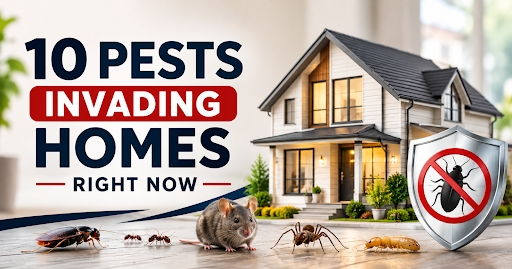
If you’ve noticed more bugs, droppings, or strange scratching sounds around your house lately, you’re not imagining it. Across Massachusetts, homeowners are reporting more pest sightings than usual, and it’s not a coincidence. Warmer seasons, older housing stock, and homes built close together all make it easier for pests to move from yard to yard and eventually indoors. Understanding which pests are most active right now, and what actually works against them, is the first step toward protecting your home.
This guide walks through the ten pests most commonly found invading homes at this time of year, why they show up, and what real pest control looks like when it’s done right. Whether you’re dealing with a full-blown infestation or just want to stay ahead of one, this breakdown will help you know what you’re up against.
Why Common Household Pests Are Showing Up More Often
Pests are opportunists. They follow food, water, warmth, and shelter, and modern homes offer all four. Common household pests like ants, cockroaches, and rodents can enter through gaps as small as a quarter-inch, hitch a ride in packages and grocery bags, or simply follow cracks in a foundation that widen over time. Once inside, they don’t need much to survive: a few crumbs, a leaky pipe, or a cluttered basement is often enough.
The bigger issue is how quickly a few stray pests can turn into a full infestation. Ants leave scent trails that guide the rest of the colony inside. Cockroaches reproduce fast, with a single female capable of producing hundreds of offspring in her lifetime. Mice can squeeze through gaps the size of a dime and begin nesting within days. This is why home pest control isn’t just about swatting what you see, it’s about interrupting the conditions that let pests multiply in the first place.
10 Common Household Pests Invading Homes Right Now
Here are the pests most frequently reported by homeowners this season, and what makes each one worth taking seriously.
1. Bed Bugs
Bed bugs are experts at hiding. While they’re best known for infesting mattresses and box springs, they also hide in curtains, cushions, carpets, and other upholstery. They travel easily through luggage, secondhand furniture, and shared laundry spaces, which is why infestations often show up in homes that seem otherwise spotless. Bites and small blood spots on sheets are usually the first clue something is wrong.
2. German Cockroaches
German cockroaches are among the most common pests found in kitchens and bathrooms. They typically hitchhike inside boxes, grocery bags, or secondhand appliances, and can also enter through exterior cracks, sewage pipes, and drains. Because they hide in tight, moist spaces, it often takes a thorough inspection to uncover the true scope of an infestation.
3. Ants
Ants are relentless when it comes to finding a way indoors, and once a colony establishes a scent trail, more ants tend to follow. They’re typically drawn in by food sources left in the open, from spilled sugar to unsealed pet food. Identifying where they’re entering and what they’re after is key to keeping them from coming back.
4. Termites
Termites are one of the most damaging pests a homeowner can face, largely because the structural damage they cause often goes unnoticed until it’s severe. They feed on wood and cellulose materials, quietly weakening beams, flooring, and framing from the inside out. Catching a termite problem early, before it compromises the structure of your home, makes a significant difference in both safety and repair costs.
5. Mice and Rats
Rodents are among the most common household intruders, especially as temperatures shift. Beyond the discomfort of an infestation, mice and rats can aggravate allergies, contaminate food storage areas, and expose a household to a range of diseases through droppings and urine. Signs include gnaw marks, droppings near food storage, and scratching sounds inside walls.
6. Spiders
While most spiders found indoors are harmless, their presence often signals a larger insect problem, since spiders follow their food source. A sudden increase in spiders or webbing in corners, basements, and window frames is usually a sign that other pests are already present.
7. Wasps and Hornets
Wasps and hornets often build nests under eaves, in attics, or inside wall voids, and their populations tend to grow quickly once established. Because a disturbed nest can pose a real safety risk, especially for households with allergies, professional removal is almost always the safer choice over DIY methods.
8. Silverfish
Silverfish thrive in damp, humid environments like bathrooms, basements, and closets. They feed on paper, glue, and fabric, which makes them a quiet threat to books, wallpaper, and stored clothing. Their presence is often one of the clearest indicators of excess moisture somewhere in the home.
9. Stink Bugs
Stink bugs are seasonal invaders that look for warm places to overwinter, often slipping in through window screens, siding gaps, and door frames. While they don’t cause structural damage, large numbers indoors can be a persistent nuisance, and squishing them tends to make the problem worse, literally.
10. Wildlife
Beyond insects and rodents, wildlife like raccoons, squirrels, and skunks can also find their way into attics, crawl spaces, and chimneys looking for shelter. These larger intruders can cause significant property damage and, in some cases, pose direct safety risks to residents, making professional removal the safest route.
How to Stop a Pest Infestation Before It Spreads
The good news is that most pest problems are preventable, and even active infestations can be brought under control quickly with the right approach. Effective pest prevention starts outside the home. Sealing cracks in the foundation, repairing damaged window screens, and trimming back vegetation that touches the house all reduce the number of easy entry points pests rely on.
- Store food, including pet food, in sealed containers rather than open bags
- Fix leaking pipes and faucets promptly, since moisture attracts multiple pest types
- Keep firewood and mulch piles away from the foundation of the house
- Declutter basements, attics, and garages where pests like to nest undisturbed
- Inspect secondhand furniture and packages before bringing them inside
These steps go a long way, but once pests are already established, prevention alone usually isn’t enough. At that point, effective pest removal requires identifying the exact species, locating nests or entry points, and applying targeted treatment, something that’s difficult to do reliably without professional tools and training.
Why Professional Pest Control Beats DIY Solutions
Store-bought sprays and traps can offer short-term relief, but they rarely address the root of an infestation. Pests that survive a surface-level treatment often become harder to eliminate the second time around, and some, like termites and wildlife, require specialized equipment and licensing to handle safely and legally.
A trained pest control professional doesn’t just treat what’s visible, they inspect the full property, identify contributing conditions, and build a plan suited to the specific pest and the layout of the home. For homeowners dealing with a persistent or recurring issue, thorough home pest control from a licensed provider is almost always more effective, and more cost-efficient in the long run, than repeated DIY attempts.
Protecting Your Home Starts With the Right Pest Control Partner
Action Pest Control has spent over 30 years serving Weymouth, MA, and the surrounding South Shore communities, helping homeowners handle everything from bed bugs and cockroaches to termites, rodents, and wildlife. Our licensed and insured specialists are equipped to inspect, treat, and protect homes against the pests most common to this region, with treatment plans built around the specific needs of each property.
Whether you’re noticing the first signs of a problem or dealing with an infestation that’s already spread, getting ahead of it now is far easier, and far less costly, than waiting. A quick inspection today can save significant time, money, and stress down the road.