
7 Signs Your DIY Pest Fixes Aren’t Working Anymore
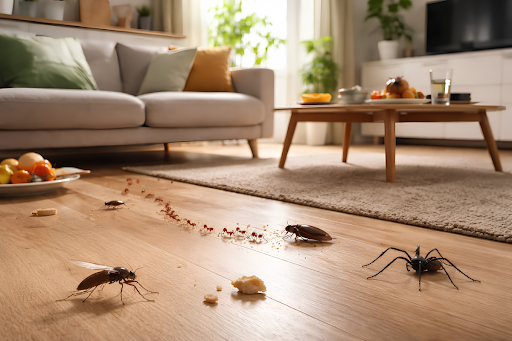
You bought the traps. You sprayed the sprays. You sealed the gap under the sink. And yet, somehow, the pests are still there. If that sounds familiar, you’re dealing with diy pest control not working — a more common problem than most homeowners realize.
DIY methods aren’t a bad first step. Many work fine for a single ant on the counter or one wasp nest in spring, and there’s no reason to call in help for something that small. The trouble starts when an infestation is larger, more established, or hiding somewhere store-bought products simply can’t reach — behind walls, under slabs, or deep inside insulation. Below are seven signs your DIY pest fixes aren’t working anymore, why that happens, and what actually helps once you’re past the point where home remedies can keep up.
Signs DIY Pest Control Is Not Working In Your Home
Before spending more money on another round of sprays or traps, it helps to know what to actually look for. These are the clearest signs diy pest control is not working the way you hoped.
1. Pests Keep Coming Back After Treatment
You treat the problem, things quiet down for a week or two, and then pests keep coming back in the same spots. This usually means the product only killed what it touched — it didn’t reach the nest, colony, or entry point that’s actually feeding the problem. Without addressing that source, the same cycle tends to repeat itself every few weeks.
2. You’re Finding Pests in New Areas of the Home
If activity is spreading — from the kitchen to the bathroom, or from the basement to the bedrooms — that’s a sign the infestation is growing faster than your DIY approach can keep up with. A pest problem that stays in one small area is very different from one that’s actively expanding room by room.
3. Store-Bought Products Stop Working as Well
Sprays and baits that worked at first but seem less effective now aren’t necessarily expired. Some pest populations build up tolerance to over-the-counter chemicals over time, especially with cockroaches and certain ant species, which means the same product you bought last month may simply do less each time you use it.
4. You Can’t Find Where They’re Getting In
Sealing one gap and finding pests again a few days later usually means there’s another, less obvious entry point — inside a wall void, under siding, or through a utility line — that a visual walk-through alone won’t catch. Pests often use several points of entry at once, not just the one you happened to notice.
5. The Infestation Seems to Be Growing, Not Shrinking
More droppings, more nests, more sightings during the day instead of just at night — all of these point to a population that’s establishing itself faster than DIY treatment is knocking it back. A shrinking problem should get quieter over time, not louder.
6. You’re Using More Product but Seeing Less Result
Going through traps, sprays, or bait stations faster each month, with less to show for it, is one of the clearest examples of diy pest control fails: the cost keeps climbing while the results keep shrinking. At some point, the money spent on repeat store-bought treatments starts to add up to more than a single professional visit would have cost.
7. You’re Noticing Signs of Damage
Chewed wiring, hollow-sounding wood, damaged insulation, or droppings in the attic point to a problem that’s moved past the surface. At this stage, the concern isn’t just seeing pests — it’s what they may already be damaging out of sight, which is often the most expensive part of waiting too long to get help.
Why DIY Pest Control Fails Over Time
It’s worth understanding why this happens, since it’s rarely about using the “wrong” product. A few common diy pest control mistakes tend to show up again and again:
- Treating what you can see, rather than the nest or colony behind it
- Using a general-purpose product on a pest that needs a targeted approach
- Sealing obvious gaps while missing less visible entry points
- Stopping treatment as soon as visible activity slows down
- Not identifying the exact pest species before choosing a product
Most homeowners aren’t doing anything wrong on purpose — DIY products are simply built for smaller, surface-level problems. Once an infestation is established, the underlying source usually needs more than a spray bottle to actually resolve, and repeating the same treatment on the same visible area rarely changes that.
How DIY and Professional Treatment Actually Compare
It helps to see the difference side by side rather than guessing at it. Here’s a general look at how the two approaches typically compare:
| DIY Pest Control | Professional Pest Control |
Focus | Treats what’s visible | Locates and treats the source |
Products used | General, over-the-counter | Targeted, species-specific |
Follow-up | Rarely included | Scheduled re-checks and monitoring |
Best for | Small, early, one-time issues | Established or recurring infestations |
What to Do When DIY Pest Control Is Not Working
If you’re seeing two or more of the signs above, it’s a reasonable point to stop and reassess rather than buying another round of the same product. This is generally when to call pest control professionals instead of continuing to treat the surface of a deeper problem that keeps resurfacing.
A professional pest control vs diy comparison usually comes down to one thing: access to the source. Licensed technicians use inspection tools, targeted treatments, and follow-up visits to find where an infestation is actually coming from — not just where it’s currently visible — and treat it at that source rather than chasing individual pests around the house.
That doesn’t mean DIY is useless. For small, early, one-time issues, it’s often a fine first step, and plenty of minor problems never need to go further than that. But once pest control not working has become the pattern rather than the exception, bringing in a professional tends to save both time and money compared to repeating the same store-bought treatment month after month with diminishing results.
Getting Help When Pest Control Not Working On Its Own
Action Pest Control has spent over 30 years serving Weymouth, MA and the South Shore area, handling everything from bed bugs and German cockroaches to termites, ants, rodents, and wildlife. Our licensed and insured technicians start with a full inspection, so treatment is based on where the problem actually starts — not just where it happens to be visible on the day of the visit.
If you’ve worked through your own fixes and you’re still noticing activity, it’s worth getting a second set of eyes on the situation before it grows into something bigger and more expensive to fix. We offer free consultations for homeowners across Weymouth and the surrounding South Shore communities, with unmarked vehicles available on request for anyone who prefers a more discreet visit.
If DIY pest control hasn’t solved the problem, you don’t have to keep guessing. A short inspection can tell you exactly what’s going on — and what it will actually take to fix it for good.